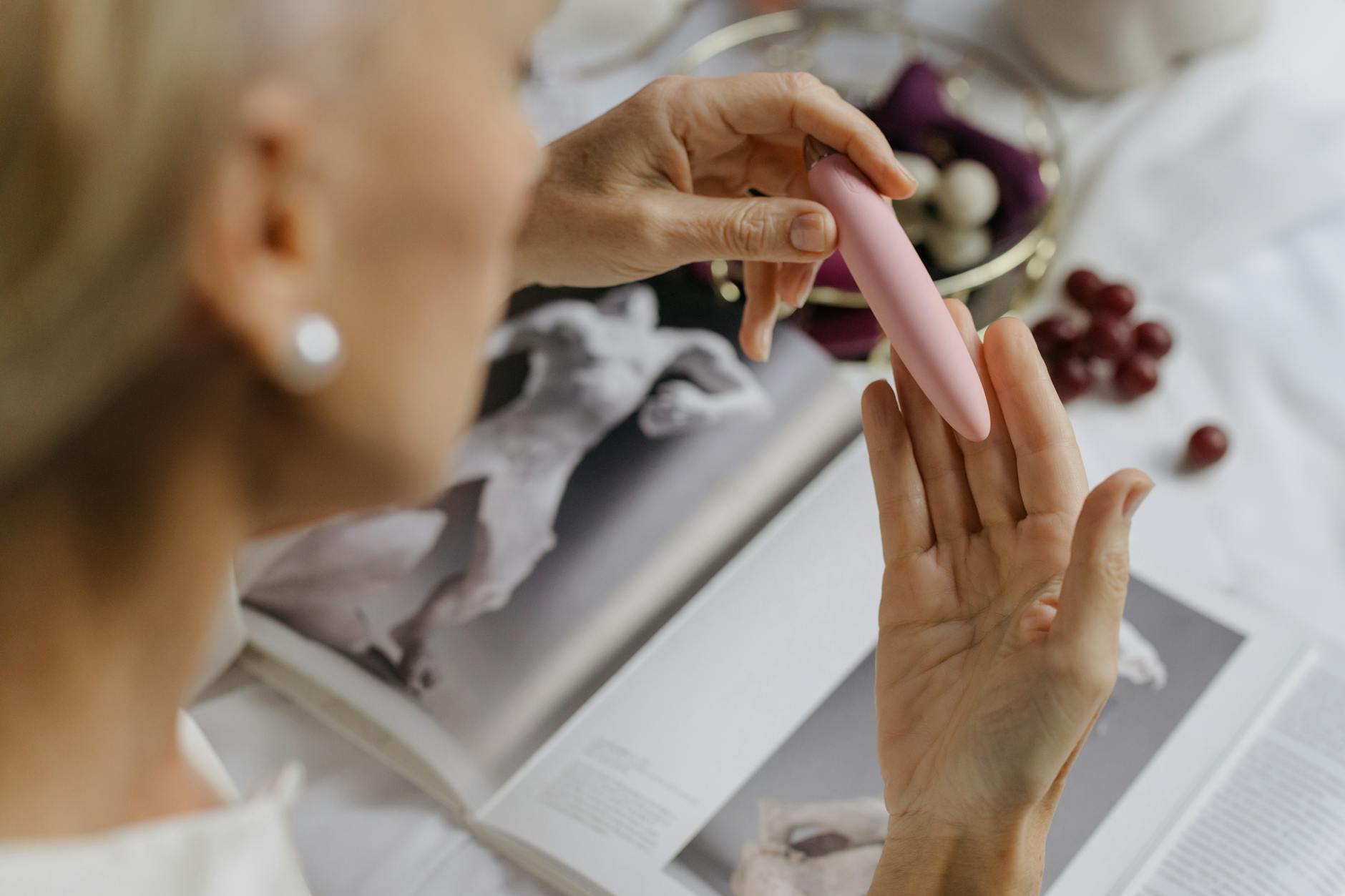
Here's what nobody tells you about menopause and sensation
Your clitoris doesn't lose feeling after menopause. But the tissue thins. The blood flow changes. The nerves that used to light up at the slightest touch start demanding more input to register anything at all. You might describe it as numbness. Clinically, it's reduced neural responsiveness caused by estrogen depletion. Both descriptions are accurate. Both feel frustrating as hell.
The good news: this isn't permanent, and it's not a sign your body is broken. It's a sign your body needs different input. That's exactly where clitoral suction vibrators like lemon vibrators come in.
Why estrogen drop causes clitoral numbness
Estrogen does three things in the clitoris that directly affect sensation. First, it maintains the thickness of the epithelial tissue. When estrogen drops, that tissue becomes thinner and more delicate. A thinner surface means fewer nerve endings per square millimeter, so the same stimulus feels quieter.
Second, estrogen supports blood flow. The clitoris is a highly vascularized organ. Estrogen keeps the blood vessels elastic and responsive. Without it, perfusion decreases. Less blood flow means less oxygen delivery to the nerve endings, which means slower signal transmission to the brain.
Third, estrogen maintains the structural integrity of the glans and the visible clitoral body. When it drops, the tissue can retract slightly, becoming less accessible and more sensitive to direct friction.
All three changes happen simultaneously. Together, they don't cause numbness as much as they cause muting. Your clitoris is still there. It still has every nerve it had before. It's just asking for a different kind of conversation.
Why lemon vibrators work differently for numb tissue
Traditional vibrators use rapid oscillation against a surface. If your clitoris has become less sensitive, this direct friction approach can feel either completely absent or, paradoxically, uncomfortable. You're either feeling nothing or you're feeling pressure without pleasure.
Lemon vibrators use air-pulse or suction technology. Instead of vibrating side to side, they create gentle rhythmic suction over the clitoris. This stimulates a different set of nerve fibers. The suction approach also distributes pressure over a wider area, which means the force per square millimeter is lower. For thinned tissue, this feels safer and, counterintuitively, more intense. The sensation travels differently through the nervous system.
The suction motion also activates the deeper nerve structures inside the clitoral body. Regular vibrators mostly engage the surface nerves. Suction reaches into the internal clitoral structure, which often retains sensitivity even when the glans feels numb.
Starting from scratch: the retraining protocol
If your clitoris has been numb for months or years, your nervous system needs gentle reintroduction to pleasure. This isn't medical; this is practical.
Week one: exploration without expectation. Use your lemon vibrator on the lowest setting for 2-3 minutes, solo, with no goal except noticing what you feel. Not arousal. Not orgasm. Just sensation. Where on the clitoris do you feel the suction most? Does the feeling change if you angle the device? Does one side feel more responsive than the other? Document this.
Week two: slow progression. Increase session length to 5-7 minutes. Still on low. Start introducing lubrication (water-based only with silicone toys). The goal is still sensation mapping, but now you're also retraining your body to recognize pleasure as a normal state.
Week three: pattern exploration. Most lemon vibrators have 2-5 suction patterns. Cycle through them. Notice which patterns create the most response. Don't push toward orgasm yet. Just stay curious.
Week four and beyond: integration. By now, sensation usually begins returning. You might notice a warm feeling, a pressure sensation, even early tingles. This is your nervous system remembering. From here, intensity increases naturally.
The entire timeline can take 6-12 weeks. That feels long. It's actually remarkably fast given what's happened to your tissue.
Practical tweaks that matter
Three things make the difference between this working and it feeling pointless.
Timing matters. Use your lemon vibrator at a time when your body is already warm. Not cold, not rushed. A bath beforehand helps. Warmth increases blood flow, which helps sensation. A 15-minute warm bath, then 10 minutes with your device, creates completely different neural input than jumping straight in.
Moisture changes everything. Estrogen depletion also reduces vaginal lubrication. A water-based lubricant isn't optional here. It reduces friction, allows the suction to work properly, and makes the whole experience feel less like you're forcing something. Apply it generously.
Angle and positioning shift the target. The clitoris isn't a single point. It's a complex structure with a visible glans, a hood, and an internal body that extends deep into the pelvic floor. A lemon vibrator positioned directly over the glans feels different than one angled toward the hood or pressed into the upper vulva. Spend time experimenting. Different angles wake up different nerve pathways.
When numbness means something else
Sometimes clitoral numbness after menopause isn't just estrogen depletion. Three situations worth noting:
If numbness appeared suddenly (within days) rather than gradually, or if it's only on one side, see your gynecologist. Sudden unilateral numbness can indicate a nerve issue unrelated to menopause.
If you're also experiencing pain, burning, or significant tissue changes, ask about genitourinary syndrome of menopause (GSM). This is treatable with topical estrogen or systemic hormone therapy. A lemon vibrator helps, but medical support might help more.
If you're on medications that affect sensation (certain antidepressants, blood pressure meds, anticonvulsants), talk to your prescriber. Sometimes numbness is medication-related, not menopause-related. The solution might be different.
Why lemon suction works when other approaches stall
If you've tried regular vibrators and felt nothing, that's not a sign you should give up. It's a sign you were using the wrong tool. How Lemon Vibrators Compare to Traditional Vibrators for Clitoral Stimulation covers the mechanical differences in depth, but the short version: air-pulse technology stimulates nerve fibers that oscillation misses entirely.
Most people who report complete clitoral numbness after menopause experience at least 40-50% sensation recovery within 8-10 weeks of consistent suction stimulation. That's not universal, but it's common enough that it's worth the effort.
Beyond numbness: what rebuilding pleasure looks like
Sensation recovery isn't linear. You might feel tingling one day and numbness the next. That's normal. Your nervous system is recalibrating. Keep using your device consistently, even on days when you feel nothing. You're not chasing orgasm. You're training your body to remember pleasure.
After sensation returns, the question becomes: what kind of pleasure do you want? How Lemon Vibrators Work Best When You Have Difficulty Reaching Orgasm explores paths to orgasm once baseline sensation is restored. But orgasm isn't the only goal. Sometimes the goal is just feeling alive in your own body again. That's valuable on its own.
Common questions about clitoral numbness and lemon vibrators
Will using a lemon vibrator make numbness worse?
No. Gentle, consistent stimulation actually improves blood flow and nerve responsiveness. The risk isn't that suction will damage numb tissue. The risk is pushing too hard too fast and making yourself sore. Start on the lowest setting and increase duration before increasing intensity.
How long until I feel something?
Some people feel a difference within a few sessions. Others take 4-6 weeks. If you feel absolutely nothing after 8 weeks of consistent use, check with your doctor. Numbness that doesn't respond to stimulation might indicate a nerve issue beyond menopause-related sensitivity loss.
Can hormone therapy help numbness alongside a lemon vibrator?
Yes. Topical estrogen cream applied to the vulva or systemic hormone replacement therapy can speed sensation recovery significantly. They're not competing approaches. They work together. Many of my clients use both.
Does numbness mean I can't orgasm anymore?
No. Orgasm is a full-body response, not just a clitoral event. Even with reduced sensation in the glans, the internal clitoral structure, the pelvic floor, and the broader nervous system can still build to orgasm. It often just requires different stimulation. Air-pulse clitoral vibrators help bridge that gap.
Is sensitivity loss after menopause permanent?
Not necessarily. Most of the sensation loss is reversible with consistent stimulation, improved blood flow, and sometimes medical support. Some permanent changes happen to tissue thickness, but that doesn't mean pleasure becomes impossible. It means pleasure changes shape.
Should I use lube with a lemon vibrator if I'm already wet?
Yes. Menopause often reduces natural lubrication even when you're aroused. Adding water-based lube ensures smooth suction contact and prevents friction irritation on thinned tissue. More lube is better than less in this case.
What comes next
Clitoral numbness after menopause feels permanent until you start rewaking that tissue. A lemon vibrator, combined with patience and consistent use, usually works where other approaches stall. You're not broken. Your clitoris isn't gone. It's asking for a different approach.
If you're ready to start, low pressure and water-based lubricant are your only requirements. If you're unsure whether numbness is something to address or you want to talk through medical options first, contact Nancy's Lem or speak with a menopause-trained gynecologist. Either way, sensation recovery is possible.