Let's talk about clitoral overload
You've probably heard that more sensation equals more pleasure. Sometimes that's true. And sometimes your body is screaming stop before you've even gotten started. Clitoral hypersensitivity is real, it's common, and it absolutely kills arousal when you're trying to enjoy yourself. The good news: it's not a problem with your body. It's usually a mismatch between what your clitoris needs and what you're using to stimulate it.
This is where lemon vibrators change everything. Because they work through suction instead of direct vibration, they deliver pleasure on a completely different bandwidth.
Why direct vibration creates overload
Your clitoris has roughly 8,000 nerve endings packed into a space the size of a pea. When a vibrator makes direct contact, every single one of those nerves gets activated at once. It's like turning on all the lights in a house simultaneously instead of dimming one room at a time.
For people with heightened clitoral sensitivity, that's not pleasure. That's sensory chaos. The nerves fire faster than your brain can process, arousal stalls, and suddenly you're tensing up instead of relaxing into it. It's a nervous system response, not a willpower problem.
Hormonal changes, anxiety, recent antibiotics, skin irritation, pelvic floor tension, even just being stressed can spike sensitivity. It's temporary or chronic depending on the cause. Either way, the solution isn't to push through. It's to change the tool.
How lemon suction works differently
A lemon vibrator like the Lem uses gentle air-pulse suction instead of vibration. Instead of stimulating the surface of your clitoris directly, suction creates a rhythmic pulse that draws tissue upward, then releases. This spreads the sensation across a wider area and reduces the intensity at any single point.
Think of it this way. Direct vibration is like a focused beam hitting one spot. Suction is like a wave moving across your whole vulva. Same amount of pleasure potential, completely different intensity profile.
Because the sensation is gentler and more diffuse, people with clitoral hypersensitivity often find they can actually relax into it. Your nervous system doesn't go into fight-or-flight. Your pelvic floor unclenches. Arousal can actually build instead of short-circuiting.
Starting with the lowest settings
Lemon vibrators typically have 5-10 intensity levels. When you're dealing with clitoral sensitivity, you don't start at level 3. You start at level 1 and stay there until you're sure your body is ready to move.
Level 1 is genuinely subtle. It's the kind of sensation you might almost miss if you weren't paying attention. That's the point. You want to build arousal slowly, let your nervous system settle, and then gradually increase if it feels good.
Most people with sensitivity find they can spend 10-15 minutes at level 1 before moving to level 2. Some never need to go higher than level 2 or 3 and get incredibly strong orgasms anyway. Intensity and satisfaction aren't the same thing.
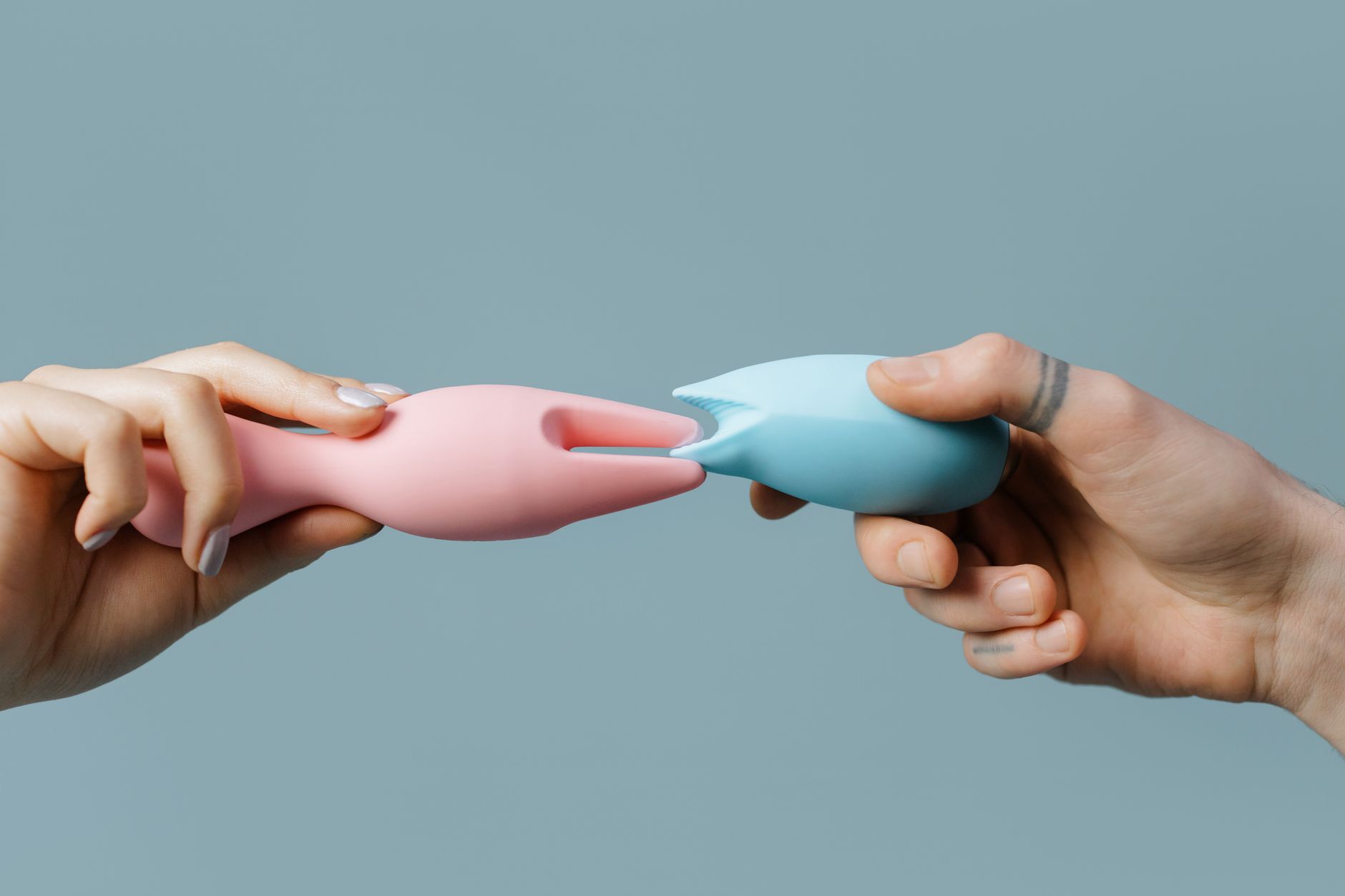
Photo by cottonbro studio on Pexels
The rhythm that actually helps
One huge advantage of lemon clitoral vibrators is their pulse patterns. Most offer a steady rhythm, but some cycle through waves of intensity. If you're sensitive, the steady pattern is your friend. It's predictable. Your body knows what to expect and can relax into it.
Wave patterns (where intensity rises and falls automatically) sound appealing until your body is already on edge. Then they feel unpredictable and can spike anxiety. Stick with steady rhythm until you've rebuilt some confidence in the sensation.
Also: this is counterintuitive, but faster isn't always better for sensitive clitorises. A slower pulse (around 20-40 Hz) often feels more manageable than rapid vibration (80+ Hz). Suction devices naturally tend toward the slower end of that spectrum, which is another reason they work so well for this issue.
Lubrication matters more than you think
Direct contact between the toy and your clitoris amplifies sensation. Even a tiny bit of friction becomes noticeable when you're sensitive. A water-based lubricant acts as a buffer. It softens the sensation without reducing pleasure, and it also protects delicate tissue from irritation.
Use it generously. Seriously. A lot more than feels intuitive. The lube creates a thin layer between toy and skin that spreads the sensation out even further. This is one of the easiest ways to dial sensitivity down by a few notches without sacrificing arousal.
If you're already using a lubricant but still finding sensation overwhelming, try switching to a thicker, more silky formula. Some people respond better to silicone-based lubes (which feel richer), though you'll need to pair them with non-silicone toys. Water-based is safe with everything.
Building a sensitivity reset routine
Clitoral hypersensitivity sometimes has an emotional component. You've had overstimulated, uncomfortable sessions before. Your body remembers. Even when you switch to a gentler tool, there's an anticipatory tension that comes back when you start.
Breaking that cycle takes a few intentional sessions. Set aside 20-30 minutes. Lower expectations dramatically. You're not trying to orgasm. You're just trying to experience gentle sensation without tensing up. Use level 1 only. Use plenty of lube. If you feel tension creeping in, slow down or stop and breathe.
After 3-4 sessions like this, most people notice their body relaxes faster. Arousal starts building earlier. The nervous system resets its baseline. Then you have the option to gradually increase intensity, but many people find they don't actually need to.
This isn't about being broken or needing to "fix" yourself. It's about meeting your body where it actually is instead of forcing it into a fantasy version of what you think it should feel like.
When to check in with someone
Clitoral pain or burning that doesn't improve after switching tools might point to something else. Thrush, contact dermatitis, lichen sclerosus, or other skin conditions can all create hypersensitivity. A gynecologist can rule those out quickly. If it's dermatological, treating the underlying cause usually resets sensitivity.
If anxiety is feeding the sensitivity (worry about performance, pressure from a partner, unprocessed trauma), that's worth naming too. Pleasure isn't just physical. A sex therapist or counselor can help untangle the emotional layers, and pleasure often returns faster once those are addressed.
For most people though, the switch from direct vibration to suction, plus patience and gentleness with themselves, solves it. Your nervous system is incredibly adaptable. It just needs the right conditions to relax.
A note on patience
Clitoral sensitivity sometimes signals that your body is asking for something different. Maybe slower. Maybe more lubrication. Maybe less pressure. Maybe solo exploration before partnered sex. These aren't barriers to pleasure. They're information. Honoring them actually builds better arousal over time than pushing through discomfort ever will.
When you use a lemon vibrator designed for suction rather than vibration, you're already speaking your body's language more fluently. The gentle pulse, the wider sensation field, the lower intensity ceiling. These features exist because bodies like yours exist, and your pleasure matters. Trust that.
People also ask
Can clitoral hypersensitivity go away on its own?
Sometimes yes, sometimes no. It depends on the cause. If it's stress-related or tied to a specific medication or hormonal event, it often fades once the trigger passes. If it's structural (like a skin condition) or deeply ingrained (anxiety-based), it usually needs active attention. That might be medical treatment, therapy, or a combination of both plus a tool like a lemon vibrator that works with your body instead of against it.
Is clitoral hypersensitivity the same as being easily orgasmic?
No. Easily orgasmic people usually enjoy intensity and can handle fast, direct stimulation. Hypersensitive people typically find intense stimulation painful or anxiety-inducing. The outcomes look opposite even though they might both involve a quick nervous system response. The difference matters when you're choosing techniques and tools.
Can I use a regular vibrator if I apply lube and use low settings?
Possibly. Some people find that strategy works. But most people with sensitivity prefer suction because it changes the type of sensation, not just the intensity. Turning down a jackhammer is still a jackhammer. A lemon vibrator is a different tool entirely, which is why it tends to help more consistently.
How long does it take to rebuild tolerance?
Most people notice improvement within 2-3 weeks of consistent, low-intensity play. Full reset might take 4-8 weeks depending on how long the sensitivity has been present and what caused it. The key is consistency and gentleness. Pushing intensity too fast derails progress and can retraumatize the nervous system.
Should I talk to my partner about this?
If you have a partner, yes. Clitoral sensitivity often makes partnered sex harder because you're managing your own nervous system and trying to coordinate with someone else. Telling them what's happening ("My clitoris feels really sensitive right now, so I need us to slow down") removes shame and opens the door to actual problem-solving. Many partners find they enjoy the slower, more intentional approach anyway. How to introduce lemon vibrators to your partner without feeling awkward has more on that conversation.
What if I'm sensitive even with suction?
Try using the vibrator indirectly. Instead of placing it directly on your clitoris, position it slightly to the side or over the larger clitoral hood area. This gives you the suction benefit without concentrated sensation on the most sensitive spot. You can also drape fabric (a thin scarf or silk) between toy and skin for additional buffering. Some people need a few layers before direct stimulation feels manageable.
Next steps
Clitoral sensitivity feels like a barrier until you understand it's actually your nervous system communicating boundaries. Honoring those boundaries with a tool designed for gentler stimulation like a lemon clitoral vibrator isn't settling. It's the fastest route back to arousal that actually feels good.
If sensitivity is affecting your relationship or your solo pleasure, that's worth addressing directly. Reach out if you want to talk through what might help.