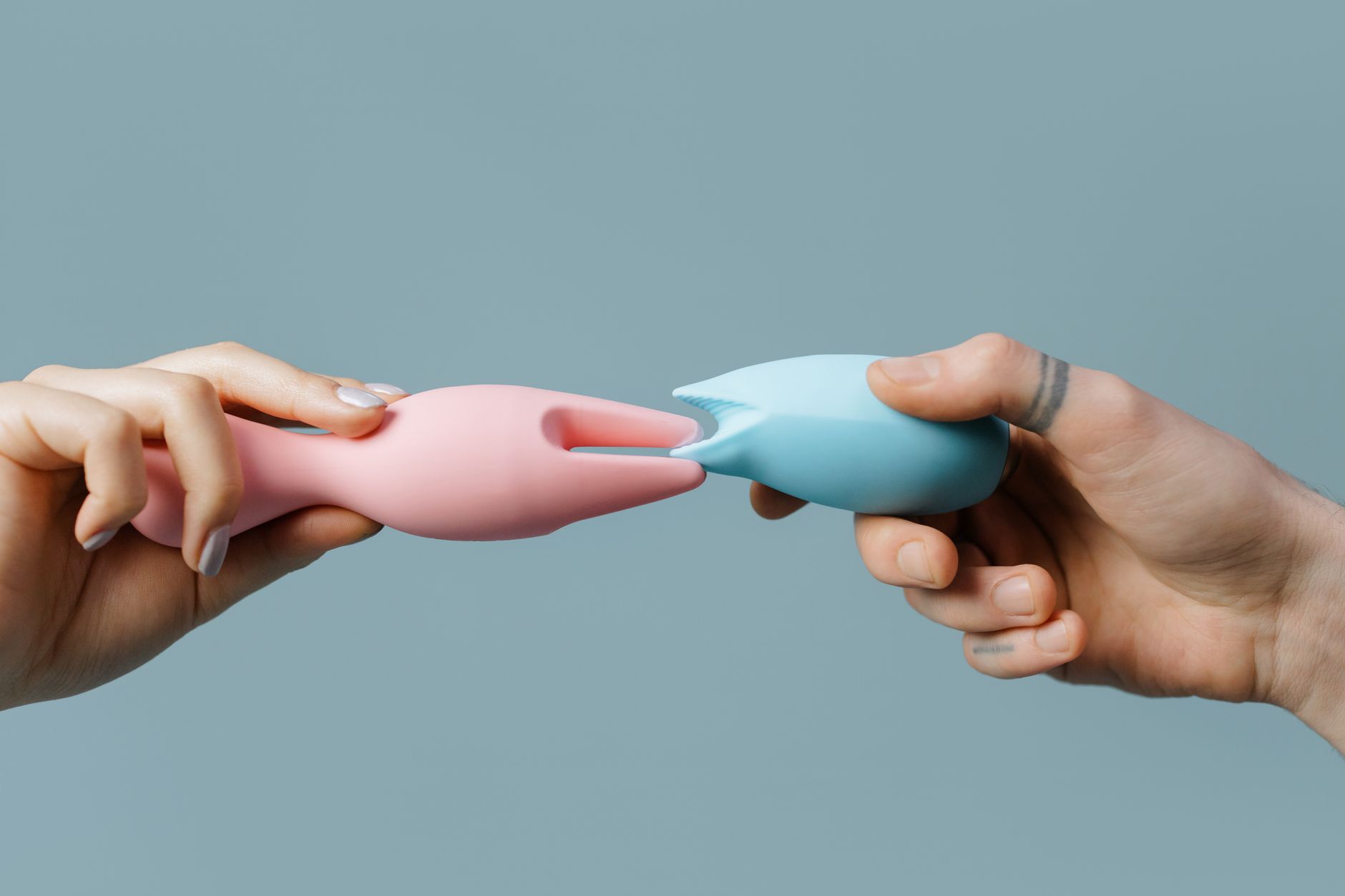
The reason this feels hard
Most people assume their partner will feel threatened, replaced, or insulted. That's the narrative we inherit. But here's what I see in practice: partners are usually relieved. They want you to feel good. They just didn't know how to say it first.
The awkwardness isn't about the vibrator. It's about the silence leading up to it.
Why the timing and framing matter more than the words
There's a difference between "I want to try something in bed" and "I think you're not enough." Same sentence shape, wildly different meanings. The second one is the story you're telling yourself, not the one you're actually saying.
When you bring up a lemon clitoral vibrator—or any toy—your partner's first instinct is to figure out what it means about them, about you, about the relationship. Your job isn't to perform confidence you don't feel. It's to be clear about what's actually happening: this is about pleasure, exploration, and (usually) connection.
The awkwardness dissolves when the frame is honest.
The three things that make this conversation land
1. Choose the right moment, not the wrong one
Not during sex. Not when one of you is tired, stressed, or distracted. Not as a surprise. The best time is a calm moment outside the bedroom—maybe over coffee, maybe before bed on a night when you're both relaxed.
Why outside the bedroom? Because you want to separate the conversation from performance. You're not asking permission in the moment. You're exploring a possibility together, on neutral ground.
2. Lead with what you want, not what he's missing
Instead of: "I need more stimulation" (which sounds like criticism).
Try: "I've been thinking about exploring something I think could feel really good for me, and I'd love to try it together."
The shift is subtle but crucial. You're not saying he's broken. You're saying you want to expand what's possible. Internally, that's about your pleasure. Externally, it's an invitation, not an indictment.
3. Normalize it before you name it
If you leap straight to "I want to use a lemon vibrator during sex," your partner's brain might still be processing what a lemon vibrator even is. You've compressed too much into one moment.
Instead: "I've been reading about how clitoral vibrators can actually change the experience for a lot of people. Some of my friends use them. I'm curious about trying one." You've just moved it from weird-personal-thing to normal-people-thing. Your partner can breathe.
Then, later: "I think I want to get one and see how it feels. Would you be open to exploring that together?"
What to say (and what not to say)
Here are three ways this conversation actually goes, from people who've had it:
Version 1 (vulnerable, direct): "I want to talk about something that feels a little awkward to say. I've realized that I come really quickly sometimes, or sometimes I don't come at all. I don't think it's about us. I think it's about learning what my body needs. I've been reading about clitoral vibrators—specifically lemon vibrators—and I think one might help me explore that. I'd love to try it, maybe with you. What do you think?"
Version 2 (curious, collaborative): "I read this thing about clitoral vibration and how the suction mechanism is different from regular vibration. I got curious. Would you be interested in exploring that together? We could try it and see if it changes anything."
Version 3 (practical, low-pressure): "I'm thinking about ordering a lemon vibrator. I want you to know because I want to explore it with you, but also because you'll probably notice it around. I thought it'd be less weird if we talked about it first instead of you finding it in the drawer."
All three work because they're honest, they don't apologize, and they leave room for your partner to respond.
What not to do:
Don't frame it as a fix for a problem in your relationship. Don't present it as a done deal. Don't make it sound like you've been fantasizing about it for months without telling him. Don't compare it to what your ex-partner did. Don't expect him to be instantly enthusiastic—neutral curiosity is fine.
How to handle the responses
Most partners say one of three things:
"Yeah, let's try it." Great. You've got the green light. Move forward with curiosity, not pressure.
"I need to think about it." This is fine. Give him space. Check in a few days later. Don't pester. Sometimes people need time to process that their own pleasure isn't the whole story anymore.
"I'm not comfortable with that." This is where it gets real. You have options: you can explore it solo, you can ask what specifically makes him uncomfortable and see if reframing helps, or you can sit with the fact that this is a boundary for him right now. That's real information. It's not a rejection of you.
If his discomfort is rooted in insecurity, that's worth addressing directly (but not in the same conversation). Something like: "I love having sex with you. This isn't about replacing that. It's about discovering new sensations. Can we talk about what's worrying you?"
The reality of using a lemon vibrator together
Here's what often surprises couples: the vibrator becomes a tool for connection, not a wedge. When you bring a clitoral vibrator like the Lem into partnered sex, you're actually creating space for your partner to focus on other forms of touch. Hands, mouth, closeness. The vibrator handles one job while you both explore everything else.
Many partners say it's the first time they've actually watched their partner experience real pleasure without trying to be the sole source of it. That's powerful. That's intimate. That's the opposite of threatening.
Start slow. Maybe he holds it. Maybe you guide his hand while you're together. Maybe you use it before he enters, or after. There's no script. The awkwardness usually disappears about three minutes in, when you're both too focused on what's actually happening to worry about the conversation that got you there.
If you want to try it solo first
There's no rule that says you have to involve your partner immediately. Some people explore clitoral vibrators alone first, get comfortable with the sensation, and then bring it into partnered sex from a place of confidence.
That's valid too. You might even use that as the opening: "I've been exploring something that feels really good. I want to share it with you." You're not asking permission. You're inviting him into something you've already claimed.
The part nobody talks about
After you've had the conversation and maybe explored it together, there's sometimes a weird hangover. You might feel exposed. He might feel uncertain. That's normal. It's not a sign that you made a mistake.
What helps: check in a few days later. Not "Did you like it?" but something gentler. "I'm glad we talked about that. I felt a little vulnerable, but also good." You're normalizing the vulnerability. You're saying the awkwardness was worth it.
Most couples find that after the first real conversation about pleasure—about what they actually want, not what they think they're supposed to want—everything shifts. Not always in a wild way. Sometimes just in a quieter way. Permission, finally, to be honest.
People also ask
What if my partner thinks I'm saying he's not enough?
He might, at first. That's the narrative he'll reach for if you don't give him a better one. Your job is to be clear: "This isn't about you. This is about me learning my own body better. I want to share that with you." Repeat as needed. If he's secure, he'll get there. If he stays stuck, that might be worth exploring with a couples therapist.
Can I use a lemon vibrator if I have a partner who doesn't want me to?
Technically, yes. But "can" and "should" are different questions. If your partner has explicitly said no, using one without his knowledge creates a bigger problem than the vibrator itself. Worth asking: is the real issue the toy, or is it about autonomy and honesty in the relationship? That's the conversation that matters.
How do I know if my partner is actually okay with it or just saying yes?
You don't, always. But you can watch. Does he engage? Does he seem curious? Does he ask questions? Or is he silent and withdrawn? His body language will tell you more than his words. If you sense hesitation, name it: "I want to make sure you're actually comfortable with this." Give him permission to change his mind.
Is it normal to feel embarrassed after bringing it up?
Completely. You just said something vulnerable. You asked for something you want. That takes guts. The embarrassment usually fades once you realize your partner didn't reject you. He probably just appreciated knowing what you actually wanted.
What if I want to try a lemon vibrator but my partner wants something different?
That's fine. Compromise. Maybe he wants to try the lemon vibrator another time, or maybe he prefers a different style. The point isn't that you both have to want the exact same thing. The point is that you're both exploring pleasure together. That's the win.
Should I buy the vibrator before or after the conversation?
After. You're not surprising him with a new toy in the nightstand. You're deciding together, or at least you're giving him the chance to weigh in. If he has thoughts about style, intensity, or features, he can tell you. You're collaborating, not performing.
The frame that actually works
Honestly, all of this boils down to one shift: stop thinking of this conversation as asking permission, and start thinking of it as inviting him into what you want. You're not broken. You're not complaining. You're exploring. And you want him there.
The awkwardness you're feeling isn't about the lemon vibrator. It's about admitting that your pleasure matters, that you deserve exploration, and that your partner might actually want that for you too. Once you're clear about that, the words come easier. Everything does.
Ready to have the conversation? Good. You've got this.