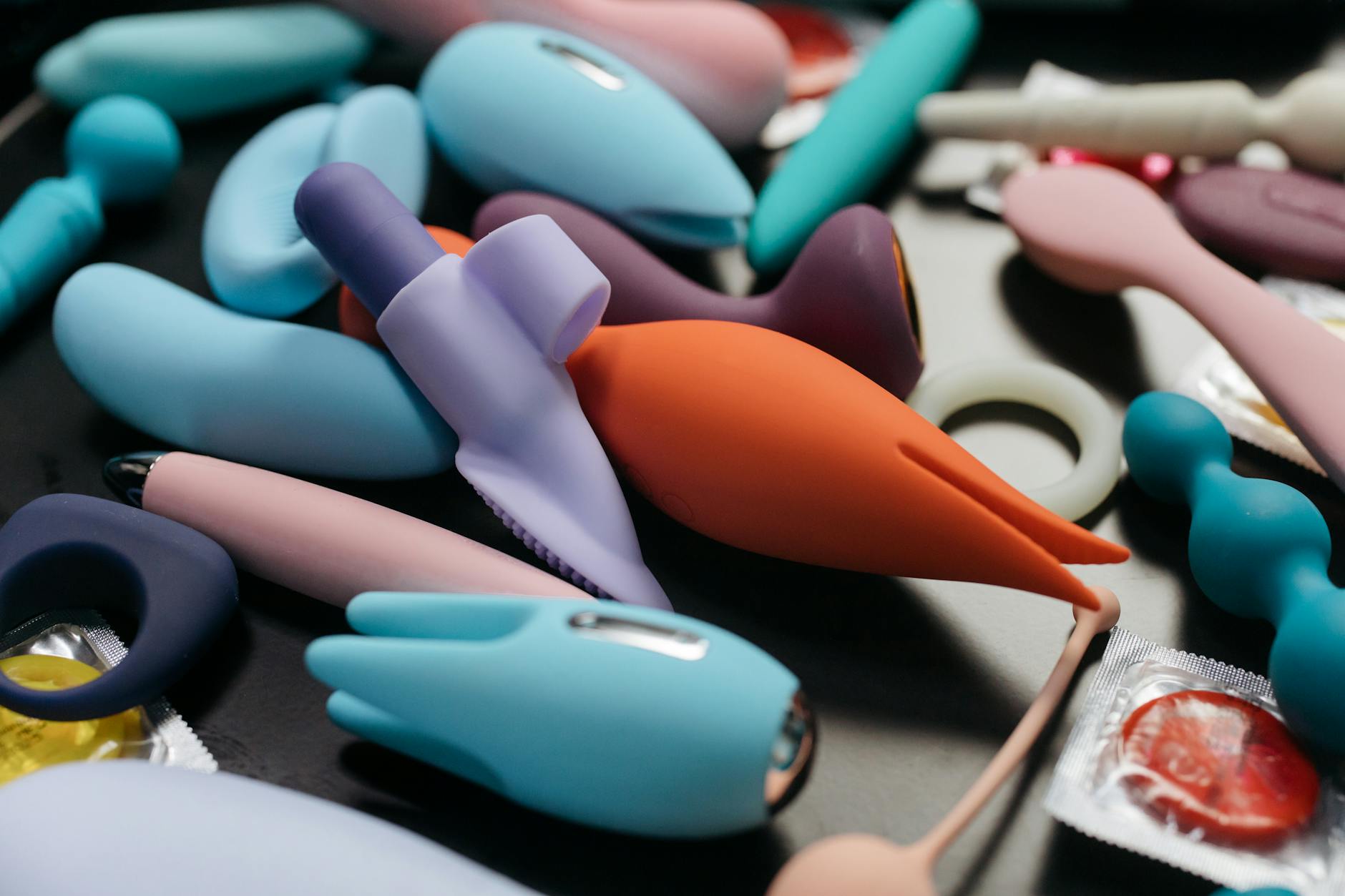
Here's what nobody tells you about arousal timing
Your arousal isn't broken. It's shifted. And there's a meaningful difference between those two things.
People come to me convinced they've lost their sex drive because it now takes 20 minutes to feel turned on instead of five. That's not loss. That's information. Your body is telling you something has changed—your stress load, your sleep, your emotional state, your hormones, or simply the decade you're in. The fix isn't to push harder or feel guilty. It's to work with what's actually happening instead of against what used to be.
When arousal slows down, lemon vibrators become less about quick payoff and more about exploration. They're genuinely useful in this situation, but only if you understand why and how to use them differently than you might have before.
Why arousal timing actually changes
Let's separate the myths from the facts. Arousal speed is influenced by at least five things, and most of them have nothing to do with desire.
Stress literally narrows blood flow. When your nervous system is in activation mode (even low-level, background activation from work, kids, finances, or news), your body deprioritizes genital blood flow. This is physiological, not psychological. You can want sex desperately and still feel nothing genitally because your parasympathetic nervous system isn't online yet.
Sleep debt has a measurable impact. Studies show that people sleeping under seven hours a night have slower arousal and lower orgasm intensity. It's not about being tired in the moment. It's about what sleep deprivation does to neural sensitivity over time.
Hormonal shifts don't just happen at menopause. If you've come off hormonal birth control, changed medications, or moved through different life phases, your testosterone and estrogen profiles have changed. Both matter for arousal speed. Lower testosterone, in particular, means your system needs more stimulation and more time to register it.
Emotional connection is not separate from physical arousal. If something is unresolved with a partner, even something small, your body knows. Not in a mystical way. In a neurological way. Your prefrontal cortex (the thinking brain) sends signals that keep the arousal system downregulated.
Attention is arousal fuel. When life is fragmented (phone in hand, part of your mind still at work, half-listening), arousal has nowhere to land. This is probably the most fixable thing on this list.
What changes when you use lemon vibrators with slower arousal
A lemon clitoral vibrator, like the Lem, uses air-suction technology instead of traditional vibration. Here's why that matters when arousal is slow to build.
Traditional vibrators require you to already be somewhat aroused to feel good. They work best when tissue is engorged and sensation is heightened. If you're starting from a place of slow arousal, they can feel numb or even irritating.
Lemon vibrators work differently. The suction mechanism pulls tissue gently into the device, which creates pressure and stimulation even when arousal is minimal. You're not waiting for sensitivity to arrive. You're creating conditions that help sensitivity arrive. It's a meaningful distinction, especially in those first 10 to 15 minutes when things are just starting to move.
Many of my clients report that lemon sexual toys become their warm-up device of choice exactly for this reason. You can start at a lower intensity, spend time just with sensation, let your nervous system settle, and gradually build from there. There's no performance pressure. The device isn't there to deliver an orgasm in five minutes. It's there to help you actually arrive in your own body.
The rhythm that actually works
Here's a concrete approach that shifts the whole dynamic when arousal feels slow.
First: create actual space. Not just time, but space. Phone off. Door locked. The knowledge that nobody needs you for 45 minutes. This is where the nervous system starts to downregulate. You can't think your way into arousal, but you can remove obstacles that keep you stuck in activation mode.
Second: start without the device. Spend five to ten minutes with touch alone. Hand, partner's hand, whatever feels right. This isn't foreplay in the traditional sense. It's nervous system preparation. You're letting your body know that sensation is safe and that there's no rush.
Third: introduce the lemon vibrator at low intensity. Start on pattern one or two. Let the suction work without expectation. This is where many people make a mistake. They think "I should feel more by now" and jump to higher intensities. That actually backfires. Slow arousal responds to patience, not pressure.
Fourth: let yourself be bored for a minute. This sounds counterintuitive, but arousal often arrives after a moment of "is this doing anything?" Just keep going. You're rewiring your nervous system's relationship to time. Expecting instant sensation is part of what's keeping arousal slow in the first place.
Fifth: when sensation starts building, don't rush. Stay where you are. Let intensity increase gradually. Most people with slow arousal benefit from 20 to 30 minutes of slower building rather than 5 minutes of trying harder. The orgasm that arrives from genuine arousal feels completely different from one that arrives from pressure.
When slow arousal is pointing to something deeper
Not all slow arousal is just about timing. Sometimes it's information about the relationship, your stress load, or something worth talking to a doctor about.
If arousal has suddenly shifted when nothing else has changed, that's worth mentioning to your GP. Thyroid issues, anemia, medication side effects, and hormonal changes all affect arousal speed. A quick conversation can rule those out or identify what's happening.
If you're partnered and arousal is slow specifically with your partner (but not alone), that's different information. It might point to something unresolved between you. You might benefit from how to introduce lemon vibrators to your partner without feeling awkward, or it might mean the two of you need a conversation about connection first. Sometimes a device helps. Sometimes a difficult conversation helps more.
If you're dealing with low arousal across the board, long-term, that might be depression, burnout, or a sign that something in your life needs to shift. A lemon vibrator is a useful tool, but it's not a substitute for addressing what's actually underneath.
How to talk about this with a partner
If you're not solo, the conversation matters. Many people try to hide slow arousal or blame themselves. Both create tension.
A clearer approach: "My arousal is on a different timeline lately. Nothing's wrong. I just need more time to warm up, and if we plan for that instead of trying to rush it, it feels so much better." That's honest without being a problem statement. It's information, not an apology.
You can also invite them into the process. "I want to explore this together" lands differently than "I'm broken and need time." A partner who's interested in your pleasure will actually like knowing what helps.
If you're using a lemon vibrator solo or together, you don't need to narrate it. You just use it. But if you're partnered, it's worth saying something like "I'm going to warm up with this" so it doesn't feel like a surprise or a rejection of them.
The mental shift that changes everything
Slow arousal stops being a problem the moment you stop racing against it.
This is the part I emphasize most with clients. You're not trying to speed up. You're trying to actually feel what you feel at the pace you actually feel it. That requires patience with yourself, which most of us were never taught.
A lemon clitoral vibrator helps create physical conditions for arousal. But the mental shift—deciding that slower is information, not failure—is what actually transforms the experience. When you have both, slow arousal doesn't feel like loss anymore. It feels like permission to slow down and actually enjoy what's happening.
People also ask
How long should I wait before using a lemon vibrator if arousal is slow?
Wait until you feel something. Not full arousal. Just the first signal that your body is responding. That might be five minutes or twenty. Once you notice any sensation, any slight warmth or tingling, that's when to introduce the device. You're not trying to jump-start a dead battery. You're amplifying a signal that's already there, even if it's faint.
Can using a lemon vibrator actually help my arousal speed up over time?
Sometimes, yes. If slow arousal is partly about nervous system activation, using a lemon vibrator can become a ritual that helps your body learn it's safe to relax and respond. Your nervous system responds to patterns. If you practice arousal in a lower-pressure way consistently, your baseline arousal speed can gradually improve. But that's a side effect, not the goal. The goal is pleasure at whatever pace you're actually on.
Is slow arousal normal when you're with a long-term partner?
Completely normal. Many couples experience this after the initial infatuation phase. Your nervous system isn't being flooded with novelty chemicals anymore. That's not bad. It means you've moved into a different kind of intimacy. It often means deeper arousal is possible, but you have to approach it differently than you did at the beginning.
What if my partner says arousal taking longer is annoying?
That's a conversation that needs to happen outside the bedroom first. Your arousal timeline isn't something you negotiate in the moment. If a partner is frustrated with the time you need, the issue isn't your timeline. It's whether they're genuinely interested in your pleasure or just their own. That's worth addressing directly. Sometimes a lemon clitoral vibrator becomes relevant after that conversation, because both people are actually engaged. Sometimes it's not the solution.
Does lemon suction technology actually feel different than regular vibration for slow arousal?
Yes, meaningfully so. Suction works by pulling tissue into the device, which creates stimulation even when arousal is minimal and tissue isn't fully engorged yet. Regular vibration relies more on a degree of existing arousal to feel good. If you're starting from nowhere, lemon adult toys are generally more accessible in those first 10 to 15 minutes. But everyone is different. If you've never tried one, it's worth testing to see if the sensation works for your body.
Can medication be affecting how quickly I get aroused?
Yes. Antidepressants, blood pressure medication, antihistamines, and hormonal birth control can all affect arousal speed or intensity. If this is a recent shift and you started a new medication around the same time, mention it to your prescriber. Sometimes there's an alternative with fewer sexual side effects. Sometimes there are strategies to work around it. But it's worth having the conversation.
The bottom line
Slow arousal isn't a flaw. It's data. When you stop fighting the timeline your body is actually on and start working with it, pleasure becomes accessible again, often in deeper ways than before. Lemon vibrators help because they meet your body where it actually is, not where you think it should be. Add patience, presence, and genuine permission to move at your own pace, and arousal becomes something you trust again instead of something you're anxious about.