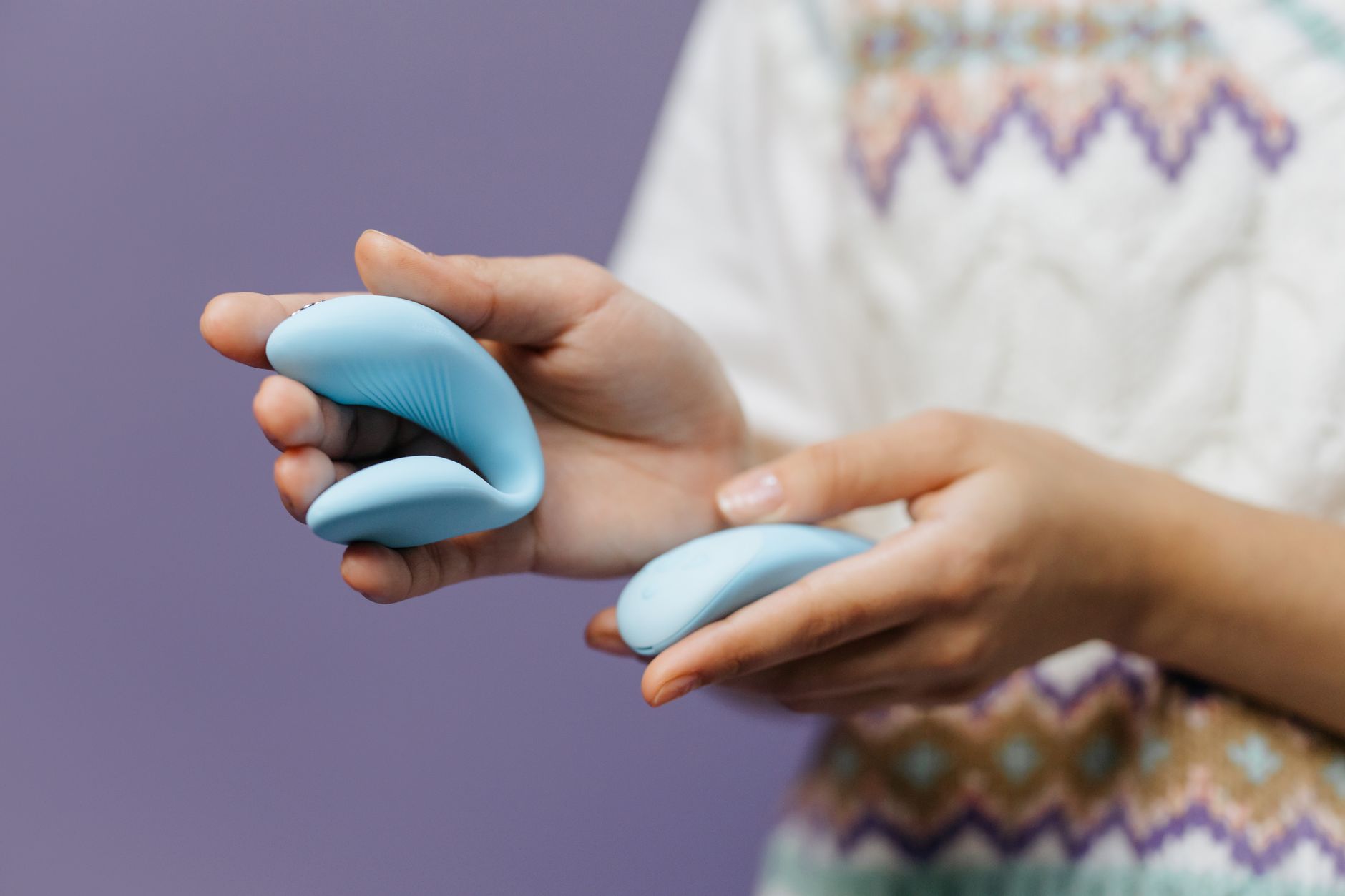
Here's what nobody tells you about partner resistance
It's not really about the toy. When a partner hesitates about bringing a lemon vibrator into your sex life, they're usually working through one of three fears. Fear that you need it because they're not doing something right. Fear that it means you want something different from them. Or fear that it's a step toward something they're not ready for. All three are understandable. And all three are fixable with the right conversation.
I've worked with hundreds of couples navigating this exact moment. The ones who come out stronger aren't the ones with perfect communication. They're the ones who understand what their partner is actually afraid of and address that directly instead of pushing the toy like it's a foregone conclusion.
The resistance usually starts here
Most partners aren't saying no to the lemon vibrator itself. They're saying no to what they think it means. That's the distinction that changes everything. Your partner might believe that introducing a clitoral vibrator means you're not satisfied. Or that toys are a substitute for intimacy rather than an enhancement of it. Or that you're hinting you want to explore things they're uncomfortable with.
None of those things are true, but your partner won't believe that until you name the fear out loud and then systematically dismantle it. Silence and assumptions create distance. Clarity creates connection.
What actually works: the three-part conversation
Don't spring this on your partner during sex or right before. Pick a time when you're both calm, fed, and not in a rush. Here's the structure I recommend:
Part one: the why, not the tool. Start with what you want more of in your sex life. "I want to experience more intense pleasure when we're together." Or "I want to explore new ways to feel good with you." Notice that you're not leading with the vibrator. You're leading with desire. Your partner needs to hear that this comes from wanting more, not from lack.
Part two: the reframe. Explain what a lemon vibrator actually does. It doesn't replace anything. It targets the clitoris in a way fingers or a penis can't. Suction stimulation (which is what lemon vibrators do) works on a different neural pathway than friction. For some people, it creates stronger and faster orgasms. For others, it opens up sensation that was locked away. But it's not a substitute for connection. It's a different sensation that you're adding to what you already do together.
Part three: the invitation, not the demand. "I'd like to try this together. I want you to be part of it. I don't want to use it solo and hide it from you. I want to explore it with you." That last bit matters wildly. Partners often get defensive because they think the toy is coming into the bedroom without them. If you're asking them to hold it, to control the intensity, to use it on you, to be present for the experience, they shift from feeling excluded to feeling invited.
Scripts that actually work
If your partner says, "I feel like you're not happy with me," try this:
"That's not it at all. I'm happy with you. And I want to feel even more. Stronger orgasms don't mean you're failing. They mean we're exploring more together. A lemon vibrator is like a different touch. Your hand can do certain things. Your mouth can do others. A vibrator does something else. They all feel different, and I want all of them."
If your partner says, "Am I not enough," use this:
"You're enough in every way that matters. And pleasure isn't a limited resource. More sensation doesn't take away from what we have. It adds to it. I want this because I want to go deeper with you, not away from you."
If your partner says, "Where is this coming from all of a sudden," try:
"I've been thinking about this for a while. I didn't bring it up because I wasn't sure how to say it. But I've been reading about lemon vibrators and how they work differently than other toys, and I got curious. I wanted to explore it with you because you matter to me."
Why lemon vibrators specifically can help here
A lemon vibrator—specifically a clitoral suction toy like the Lem—is actually easier to introduce than a traditional vibrator. Here's why: traditional vibrators are phallic. They mimic penetration. And even if you're not using them for penetration, that visual association can trigger the "you want something I can't give you" response in a partner.
A lemon vibrator looks different. It feels different. It doesn't look like anything anatomical. It's clearly a specialized tool for clitoral stimulation, which means your partner can understand immediately that it's not replacing them. You're not asking for something you can get from someone else. You're asking for a sensation that only this tool creates.
How to use it together (the actual mechanics)
Once your partner agrees to try, here's how to make the first experience work:
Start with your partner in control. Let them hold the lemon vibrator. Let them explore what it does at different intensity levels. This keeps them an active participant instead of a spectator. You guide them: "A little higher," "Try this pattern," "That feels incredible." They're doing the pleasuring. The toy is just the tool they're using.
Talk through what you're feeling. Not performance talk ("Oh yes, that's so good"), but actual feedback. "That pressure feels different than I expected," or "That intensity is perfect," or "Can you hold it steady right here." Your partner learns what works and feels useful instead of replaced.
Incorporate touch. While they're using the vibrator on you, touch them. Hold them close. Kiss them. Make it clear that this is intimate and that they're central to the experience. The vibrator is a tool in your shared experience, not a barrier between you.
After, talk about what happened. "That felt incredible, and I loved that we did it together." Or "I felt closer to you because you were so present with me." Partners often worry silently that the experience was weird or that they did it wrong. Reassurance isn't insincere. It's necessary.
When you encounter harder resistance
Sometimes a partner says no and stays firm. That's worth taking seriously. There are a few things happening:
Some partners have genuine religious or values-based objections to sex toys. That's not something you overcome with the right script. That's something you navigate as a couple, and it might mean compromises on both sides—or it might mean that this particular difference is actually bigger than the vibrator itself.
Some partners have experienced infidelity or betrayal, and toys feel like evidence of checking out. If that's your situation, the vibrator isn't the real issue. Trust is. And you might need a couples therapist to work through that before toys become relevant.
Some partners are dealing with performance anxiety or erectile dysfunction, and the vibrator feels like a mirror on that struggle. If that's happening, your partner needs support for the actual issue. Avoiding the vibrator won't fix the underlying problem.
If your partner is resistant from a place of real pain, forcing the issue creates damage. Understanding where the resistance comes from is the first step toward actually moving forward together.
The middle path (if your partner still says no)
Not every couple uses vibrators. And that's fine. But if you want to explore pleasure together without a lemon vibrator, here are alternatives that sometimes feel less threatening:
Focus on extended foreplay and different types of touch. Longer warm-up time means more arousal, which means stronger sensation. That's not about inadequacy. It's about understanding your body's rhythm.
Explore positions that give you better clitoral access. Angles and friction patterns matter. Sometimes a small shift in positioning creates more sensation than a toy ever could.
Talk about fantasy and mental arousal. Sometimes the resistance to toys melts when partners understand that mental engagement and novelty can create the same intensified sensation.
If you're in a long-term partnership and pleasure has plateaued, a vibrator isn't the only solution. But it is one solution. And if your partner's resistance comes from fear rather than genuine values conflict, the conversation—not the toy—is what changes things.
FAQ
Why do partners get defensive about clitoral vibrators?
Most partner resistance comes from one of three fears: that the vibrator means you're not satisfied with them, that it signals you want to explore things outside the relationship, or that it's a step toward losing intimacy with them. The vibrator itself isn't the problem. The assumption about what it represents is. That's why naming the fear directly—"I'm worried you think I'm not enough for you"—and then clearly refuting it is so powerful.
Can a lemon vibrator actually help reconnect a couple who's drifting?
A vibrator alone won't fix a couple that's disconnected. But it can be a catalyst for reconnection if the disconnection is about pleasure and sensation rather than deeper trust issues. Using it together requires communication, presence, and vulnerability. Those three things are exactly what couples need to rebuild anyway. So the vibrator becomes a tool for the real work—which is paying attention to each other again.
What if my partner agrees but then seems uncomfortable during sex?
Stop and talk about it immediately. Don't wait until after. "I'm noticing you seem hesitant. What's going on?" Your partner might be experiencing performance anxiety, feeling weird about the toy, or dealing with a sensation they weren't expecting. The first experience with a lemon vibrator isn't the time to push through discomfort. It's the time to pause, check in, and adjust. Comfort matters more than completing the experience.
How do I know if my partner's resistance is about the vibrator or about something deeper?
Pay attention to whether your partner's resistance is specific ("I don't like the idea of toys") or vague and emotional ("I don't know, it just feels wrong"). Specific objections you can address with conversation. Vague resistance usually signals that something else is happening—trust issues, body image concerns, sexual anxiety, or unprocessed hurt. If you sense that, couples therapy is more useful than a vibrator.
Should I use a lemon vibrator solo before introducing it to my partner?
It depends on your dynamic. Some partners prefer to discover it together. Others feel more secure if you've already used it solo and can talk about the experience firsthand. Either approach works. What matters is that you're being honest about your interest and inviting your partner into the experience rather than hiding it or springing it on them.
What if I want to use a lemon vibrator and my partner never will?
Then you have a choice to make. Some couples negotiate solo use with clear boundaries. Others decide that the difference in desire around pleasure is something they can live with. Neither choice is wrong, but the decision should be mutual and explicit rather than secret. A relationship can handle almost any difference if both people feel heard and respected.
The real thing
Introducing a lemon vibrator to a skeptical partner isn't about convincing them that toys are good. It's about helping them understand that your desire for more pleasure isn't a referendum on them or your relationship. It's an expansion, not a replacement. The conversation matters more than the vibrator. And the vibrator works best when both people feel like they're exploring together rather than one person pushing the other toward something they're afraid of. That's when pleasure becomes something you share instead of something that divides you.
If you and your partner are navigating this conversation and need a clearer roadmap, we're here to help. Reach out at /contact with any questions—we work with couples through this all the time, and there's no shame in getting guidance.