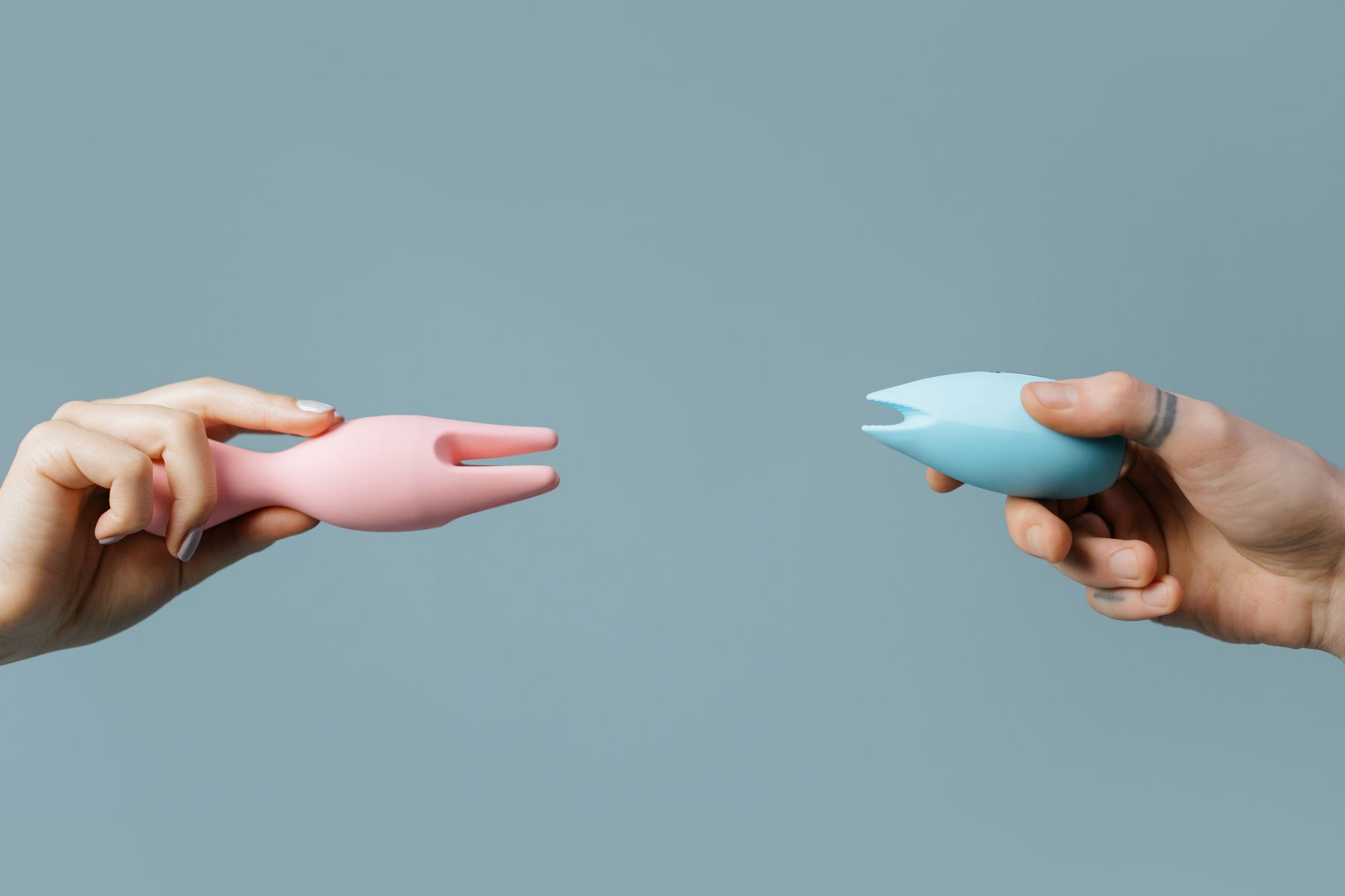
Let's start with the honest part
Burnout kills libido faster than anything else I see in my practice. Not hormones, not relationship issues, not medication—chronic stress. The cortisol flood that keeps you wired at 3 a.m. also keeps your nervous system locked in fight-or-flight mode, which means pleasure literally cannot happen. Your body is too busy protecting you to enjoy anything.
Here's what's weird: most advice for low libido assumes you need to relax more (take a bath, meditate, communicate) or that desire will return if you just wait long enough. Both are partially true and completely unhelpful when you're underwater at work.
What actually works is a different angle. Instead of chasing desire that isn't there, you use tools like lemon vibrators to bypass the cognitive layer entirely. You're not trying to "get in the mood." You're rewiring your nervous system's capacity to feel pleasure while everything else is on fire.
Why stress kills desire (and why willpower won't fix it)
When you're burned out, three neurochemical things are happening simultaneously.
First, your dopamine is depleted. Dopamine is what creates anticipation and desire—it's not about pleasure itself, it's about wanting pleasure. Chronic stress burns through dopamine reserves like a tank on fumes. You know intellectually that you want sex, but you feel nothing.
Second, your prefrontal cortex (the thinking brain) is offline. Stress redirects blood flow away from the parts of your brain that handle intimacy and toward the amygdala, which is scanning for threats. So even if you get to bed with a partner, your brain is running a background threat-detection program. Nothing sexy happens in threat mode.
Third, your nervous system is dysregulated. This is the big one. Dysregulation means your body can't shift from sympathetic (alert) to parasympathetic (rest and digest). You can't relax into pleasure because your threat-detection system is still running.
No amount of intention or communication fixes this. You can't think your way into desire when your neurobiology is locked in survival mode.
How lemon clitoral vibrators work differently when stress is the culprit
Lemon vibrators—specifically the suction-based design—work because they don't require you to build desire first. They create sensation that your nervous system can't ignore.
Unlike traditional vibrators that provide rhythmic stimulation, lemon suction vibrators use gentle pulsing pressure that stimulates nerve endings without requiring you to be aroused to start. You're not waiting for desire. You're creating the physiological conditions that allow desire to emerge.
Here's the mechanism. When you apply a lem vibrator to the clitoris, the suction triggers a release of oxytocin and serotonin—two neurochemicals that directly counter the effects of cortisol. You're not fighting stress with your mind. You're chemically shifting your nervous system state through sensation.
For people in burnout, this matters because the barrier to pleasure isn't emotional resistance or relationship conflict. It's neurobiological. Your body has learned that sustained arousal isn't safe right now. A lemon suction vibrator teaches your nervous system that pleasure is possible even when you're tired, stressed, and depleted.
Starting when nothing feels sexy (the realistic version)
When burnout is bad, you're not going to light candles and have a sexy evening. Here's what actually works.
Set a tiny, repeatable time. Not "when you're in the mood"—that might be months away. Pick a Tuesday at 8 p.m. for ten minutes. Same day, same time, same place. Your nervous system learns through routine. After two weeks of consistency, your body will start anticipating it. That anticipation is your dopamine rewiring itself.
Start fully clothed. Seriously. You're teaching your system that pleasure is safe and available without the vulnerability of undressing. Use your lem vibrator over your underwear. No performance pressure, no exposure anxiety. Just sensation.
Use pattern 1 or 2. Don't go hunting for the big orgasm. Lower intensity is actually better when your nervous system is fried. You're not trying to climax. You're trying to remind your body what pleasure feels like. This distinction is massive.
Stop if you hit frustration. If at any point you feel annoyed or bored, stop. Seriously. The goal is to create a positive association with pleasure again, not to force it. One minute of good sensation beats fifteen minutes of obligation.
The partner conversation (when there is one)
If you're partnered, your stress-induced low libido becomes their thing too. They interpret it as rejection. You interpret it as failure. Everything becomes tense.
Using a lemon vibrator solo during this phase isn't about rejecting your partner. It's medical. You're treating a symptom of burnout, not your desire for them. But saying that usually sounds defensive.
Instead: "I'm using this time to rebuild my relationship with pleasure while I'm stressed. It's not about you. It's literally about rewiring my nervous system. I'll tell you how it's going." Then actually tell them. Show them you're using it specifically to recover your capacity for desire—which includes desire for them.
Many partners actually relax when they understand it's a nervous system issue, not a partnership problem. You're not siloing yourself away. You're doing solo work that will eventually make intimacy with them more possible.
When pleasure starts coming back (what to expect)
This isn't linear. Some weeks you'll have curiosity. Some weeks you won't. That's normal in recovery.
What you'll notice first is that you start thinking about it without dread. Then you notice physical sensation returning—tingling, warmth, actual responsiveness. Then you notice anticipation. That's the dopamine rewiring. Finally, you get actual desire. The order matters because it shows your nervous system is learning.
Once you're consistently feeling sensation, you can slowly layer in other things. Switch from fully clothed to removing underwear. Extend sessions beyond ten minutes. Try different patterns. Introduce a partner back into the room, or try using a lemon vibrator together.
But the entire foundation—the thing that makes all of this possible—is that you started small, stayed consistent, and used a tool that worked neurobiologically, not motivationally.
How this is different from waiting it out
Most people assume libido will return on its own once stress decreases. Sometimes it does. Often it doesn't, because your nervous system has learned that pleasure isn't available right now. It's not a conscious belief. It's a pattern in your nervous system.
Using a lemon vibrator while you're still burned out teaches your body something different. You're saying, "Pleasure is available even now. Your system is safe enough for this." Once stress decreases and you've already wired this capability back in, recovery is much faster.
You're not waiting for better circumstances. You're rewiring yourself in the middle of hard circumstances. That's the difference between passive hope and active recovery.
Managing shame while you're doing this
Here's the thing I hear constantly: "I feel like I should just want my partner" or "I'm broken for needing a tool" or "This feels like cheating on the work of fixing our relationship."
None of that's true. Your system is stressed. Your nervous system doesn't care about shoulds. Using a clitoral suction vibrator when you have stress-induced low libido is not an indulgence. It's recovery work.
If you broke your leg, you'd use crutches. This is the same thing. You're using a tool designed specifically to help when your nervous system is stuck.
The shame you're feeling is actually worth exploring separately—maybe with a therapist who understands that desire isn't a choice, it's a symptom of nervous system health. But the shame shouldn't stop you from using something that works.
When to know you're recovering
You're recovering when you think about pleasure without resentment. When you can use a lemon vibrator and feel something. When you're not checking your phone and doing email in your head while you're supposed to be having pleasure.
You're also recovering when you start wanting your partner again—not from obligation, but from genuine curiosity. That's your dopamine system coming back online.
If you're three months into consistent use and still feeling nothing, that's worth talking to a doctor about. Sometimes burnout is accompanied by depression or ADHD or other things that need their own support. A vibrator is a tool, not a cure.
But most of the time, consistent use of a lemon clitoral vibrator—combined with reducing stress where you actually can and being patient with yourself where you can't—rebuilds that neural pathway faster than almost anything else.
People also ask
Can you use a lemon vibrator when you have no libido?
Absolutely. That's actually when they work best. Libido and sensation are different things. You might have zero desire but plenty of physical sensation. The sensation often brings desire back. Start with pattern 1 or 2 and keep expectations low—you're not chasing an orgasm, you're remembering what pleasure feels like.
How long does it take for stress-related low libido to come back?
It depends on the stress. If you're about to leave a burnout job, weeks to months. If you're still in it, it's slower—but consistent use of a lemon vibrator can still rewire your capacity for pleasure in parallel. The key is consistency, not how quickly everything improves.
Is it okay to use a lemon vibrator when you don't want to?
Yes, specifically in this context. You're not using it out of obligation to a partner. You're using it as a nervous system recovery tool. That's intentional, not forced. If you hate it, stop. But give it at least three sessions before deciding.
Should you tell your partner you're using a lemon vibrator for stress and low libido?
Depends on your relationship. If you're partnered and exclusive, transparency usually builds trust. If you're concerned about their reaction, you could start with: "My libido is tanked from stress. I'm going to try some solo recovery work. It's not about you, it's about me rebuilding my nervous system." Most partners appreciate honesty and understanding over silence.
Can lemon vibrators replace therapy or medical care for burnout?
No. A lemon vibrator is a tool that helps you rebuild pleasure capacity. It's not treating the burnout itself. You still need to address the stress—whether that's changing jobs, therapy, medication, or boundaries. But you can do both: address the root cause and rebuild pleasure in parallel.
What's different about using a suction vibrator versus a traditional vibrator when you're burned out?
Suction vibrators like lemon toys work on nerve stimulation rather than friction. They require less arousal to feel good and can work even when your system is depleted. Traditional vibrators often feel like more effort when you're already exhausted. Start with suction if stress is the issue.
The real thing
Burnout isn't a character flaw or a sign you're broken. It's what happens when stress overwhelms your system long enough that your nervous system stops believing pleasure is safe or available. A lemon vibrator doesn't fix burnout, but it does teach your body that pleasure is still possible—even now, even while everything else is falling apart. That rewiring is the first step back.