How Lemon Vibrators Help When You're Navigating Pleasure Changes With a New Partner
Here's what nobody tells you about new relationships and pleasure
You know your body. You've figured out what works, what feels good, what gets you there. Then you meet someone new, and suddenly everything changes. Your arousal feels slower. Your favorite moves don't land the same way. Orgasms come harder, if they come at all. And you're standing there thinking: Is this normal? Am I broken? Did I make a mistake with this person?
You're not broken. This is what actually happens when your nervous system is learning someone new.
Why your body responds differently with a new partner
Pleasure isn't just physical. It's neurological. When you're with someone familiar, your brain knows the rhythm, anticipates the touch, relaxes into the pattern. With a new partner, your nervous system is in exploration mode. That's protective, actually. Your body is reading cues, assessing safety, building trust at a cellular level.
This means arousal takes longer. Your clitoris might feel more sensitive or less responsive. Orgasms might feel flatter, or they might not show up on the timeline you're used to. The sensation of being touched in a familiar way by an unfamiliar person can even feel mildly overstimulating at first.
None of this means the relationship is wrong. It means your body is doing exactly what it's supposed to do: learning.
The gap between solo pleasure and partnered pleasure
When you're alone, you control pace, pressure, rhythm, and timing. You've calibrated these things over months or years. Your hand knows your body. Your vibrator knows your body. You can build arousal in a straight line from zero to orgasm.
With a partner, you're negotiating all of that in real time. You can't speak the internal language your body uses when you're alone. Your partner doesn't have the muscle memory of your responsiveness. So there's a gap. A learning curve. A space where what you know doesn't quite translate.
That gap is where most couples get stuck. Someone interprets slower arousal as lower attraction. Someone assumes an orgasm that didn't happen means the experience was a failure. But the gap isn't a sign of incompatibility. It's just the beginning of learning each other.
How lemon vibrators bridge the translation problem
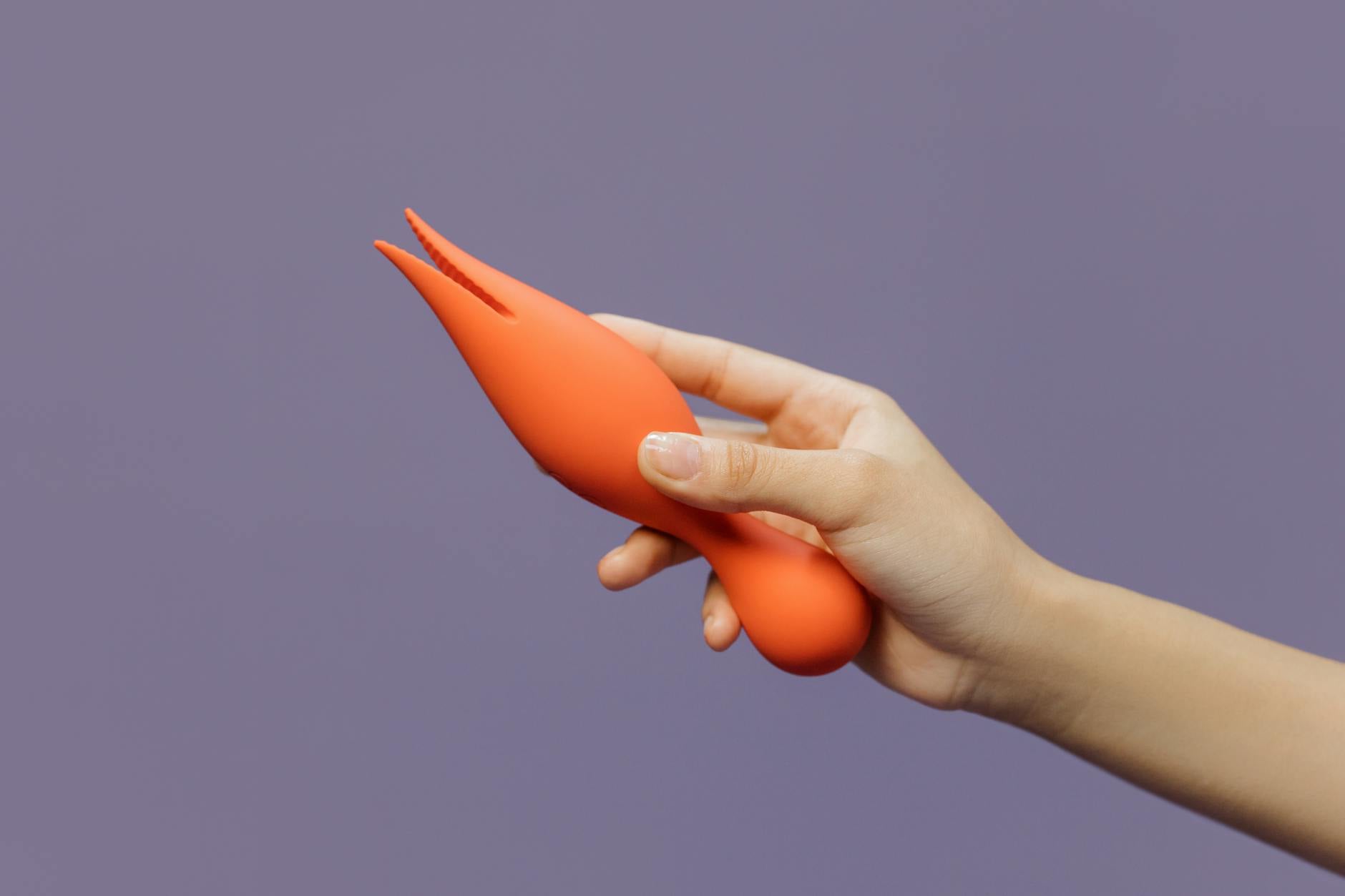
Here's the thing about clitoral suction vibrators like our lemon vibrator: they do something your partner's fingers or tongue alone can't do. They deliver consistent, predictable stimulation that works the same way every time. That consistency is a bridge.
When you introduce a lemon vibrator into partnered play, you're not replacing your partner. You're giving your nervous system a familiar anchor while you're learning this new person. Your body already knows how suction feels. You've already had orgasms with this rhythm. So your nervous system can relax a little. It doesn't have to relearn pleasure from scratch. It can focus on the new variable: being with someone else.
The clitoral vibrator becomes the constant in an equation that's otherwise shifting. And that consistency helps your arousal find its footing faster.
Starting the conversation without the awkwardness
Introducing a toy into partnered play can feel risky. Will they feel inadequate? Will they think you don't want them? Will it become weird?
The clearest way through this is to separate two conversations. One is about your body and what helps you come. The other is about intimacy and connection with this person. Those aren't the same conversation, even though they feel tangled.
Try something like: "My body takes a while to warm up with someone new. That's not about you. It's about how my nervous system works. I've found that this helps me relax faster so I can actually be present with you." That's factual. It centers your own physiology, not his adequacy. It positions the vibrator as a tool for presence, not a replacement.
Most secure partners will hear that as honest and appreciate the clarity. Some might feel vulnerable. That's normal. But that's a conversation about feelings, not about the vibrator itself.
The rhythm of integration: solo, then together, then both
You don't have to jump straight to using a lemon vibrator during partnered sex. That's one option, but it's not the only one.
Some people find it helpful to use a clitoral vibrator alone first. Get used to that particular sensation again. Remind your nervous system what you're capable of. Then, once you feel solid in your own arousal, bring it into partnered play.
Others integrate it differently: partner stimulation, then vibrator, building toward orgasm together. Or vibrator first, on your own, then hands and other contact afterward. The sequence matters less than the fact that your body gets to remember what pleasure feels like in a context where you're safe.
That's when the nervous system settles. When you remember: I can do this. My body works. This is just learning someone new.
What changes as the relationship matures
Here's the plot twist: as you spend more time with a partner, your nervous system recalibrates. What took fifteen minutes in month one takes ten minutes in month three. Your arousal finds a rhythm. Your body starts anticipating their touch. The gap closes naturally because you're building muscle memory together.
Many people find they don't need the vibrator as much as the relationship deepens. That's fine. Or they keep using it because it's just part of their pleasure toolkit. Also fine. But the desperate edge usually softens. The arousal gets easier. Your body remembers that this person is safe, and that changes everything.
When pleasure changes mean something else is happening
There's a difference between the normal nervous system adjustment of a new relationship and a sign that something's actually mismatched. If months in, you still feel no attraction. If your partner is pressuring you about timing or performance. If you're anxious during sex in a way that doesn't settle. Those are different questions than the early-stage slower arousal we're talking about here.
But in the first month or two? When everything feels new and your body is moving slower than you expect? That's just information. Your nervous system is being careful. Let it.
People also ask
Will using a vibrator with a new partner make them feel insecure?
Not necessarily. Most insecurity comes from not knowing what's happening. If you're clear that your arousal is slower because your nervous system is adjusting, and that the vibrator is a tool to help you relax and be present with them, most partners will understand. The ones who don't might have deeper insecurity worth exploring, but that's a them issue, not a vibrator issue. Good partners want you to feel good.
How long does it usually take for pleasure to feel normal again with a new partner?
It varies wildly. For some people, a few weeks. For others, a few months. Your nervous system is doing a threat assessment on a primal level. The more safe you feel with this person, the faster it usually settles. Consistency, communication, and trust accelerate the process. A lemon vibrator can help speed that along by giving your body a familiar sensation while everything else is new.
Should I use a vibrator every time we have sex, or just sometimes?
Neither. Use it when your body needs it. Some sessions you'll want it. Some sessions your arousal will be flowing and you won't need the extra support. The goal isn't to become dependent on it. The goal is to have a tool that helps your nervous system calm down so you can connect. As the relationship develops, you'll probably use it less. That's progress.
Can I use a lemon vibrator during partnered sex, or only before?
Both. Some people like it during, some before, some after. You can use it while your partner is also touching you. You can use it solo while they're inside you. You can focus on it entirely while your partner provides other kinds of contact. There's no wrong way. The only rule is that it feels good to you and consensual to them.
What if my partner wants to use the vibrator on me instead of their hands?
That's totally possible. Some partners really like that. It takes pressure off them to be the source of sensation, and it gives them a different role: caretaker, guide, spectator. But some people find it less intimate. You get to decide what feels right. And that decision might change as the relationship develops.
How do I bring this up without sounding like I'm criticizing their technique?
Frame it around your nervous system, not their performance. "My body takes time to warm up when I'm with someone new. Using this helps me relax faster so I can actually feel what's happening" is different from "Your fingers aren't doing it for me." The first is about you. The second is about them. Stick to the first one.
The real thing happening here
When you're navigating pleasure changes with a new partner, you're not broken and your body isn't failing. You're in the vulnerable, weird, beautiful space where your nervous system is learning someone new. That takes time. That takes trust. That takes permission to feel awkward and slow and uncertain.
A lemon vibrator is just a tool to help you remember that your body works while you're in that learning phase. It's a bridge between what you know about yourself and what you're discovering about pleasure with this person. Use it if it helps. Skip it if you don't need it. But know that slower arousal, sensitivity shifts, and the occasional missing orgasm aren't signs of failure. They're signs that your nervous system is being exactly as careful as it should be.
The rest is just time. And maybe a device that feels good in your hand.