You're not broken. You're not selfish. You're not weird. But somewhere between childhood and now, you probably picked up the message that wanting pleasure for yourself was at minimum inconvenient, and at maximum, wrong.
Most people grow up hearing silence about their own bodies. Not cruelty, just silence. And silence teaches you that pleasure is something that happens to you, not something you create. It teaches you that needing it is a flaw. It teaches you that talking about it is shameful.
Then adolescence hits, and if you were assigned female at birth, you got additional layers: the message that your sexuality exists for someone else's desire, that desiring solo pleasure is settling or tragic or proof you're not wanted enough. Weirdly, we never hear this about men. Funny how that works.
By your 20s or 30s, most of my clients have developed a core belief that goes something like this: "My pleasure is less important than keeping the peace." Or: "If I enjoy this too much, it means I'm broken." Or the personal favorite: "If I'm doing this alone, I'm failing at being in a relationship."
None of that is true. But it feels true. That's the problem.
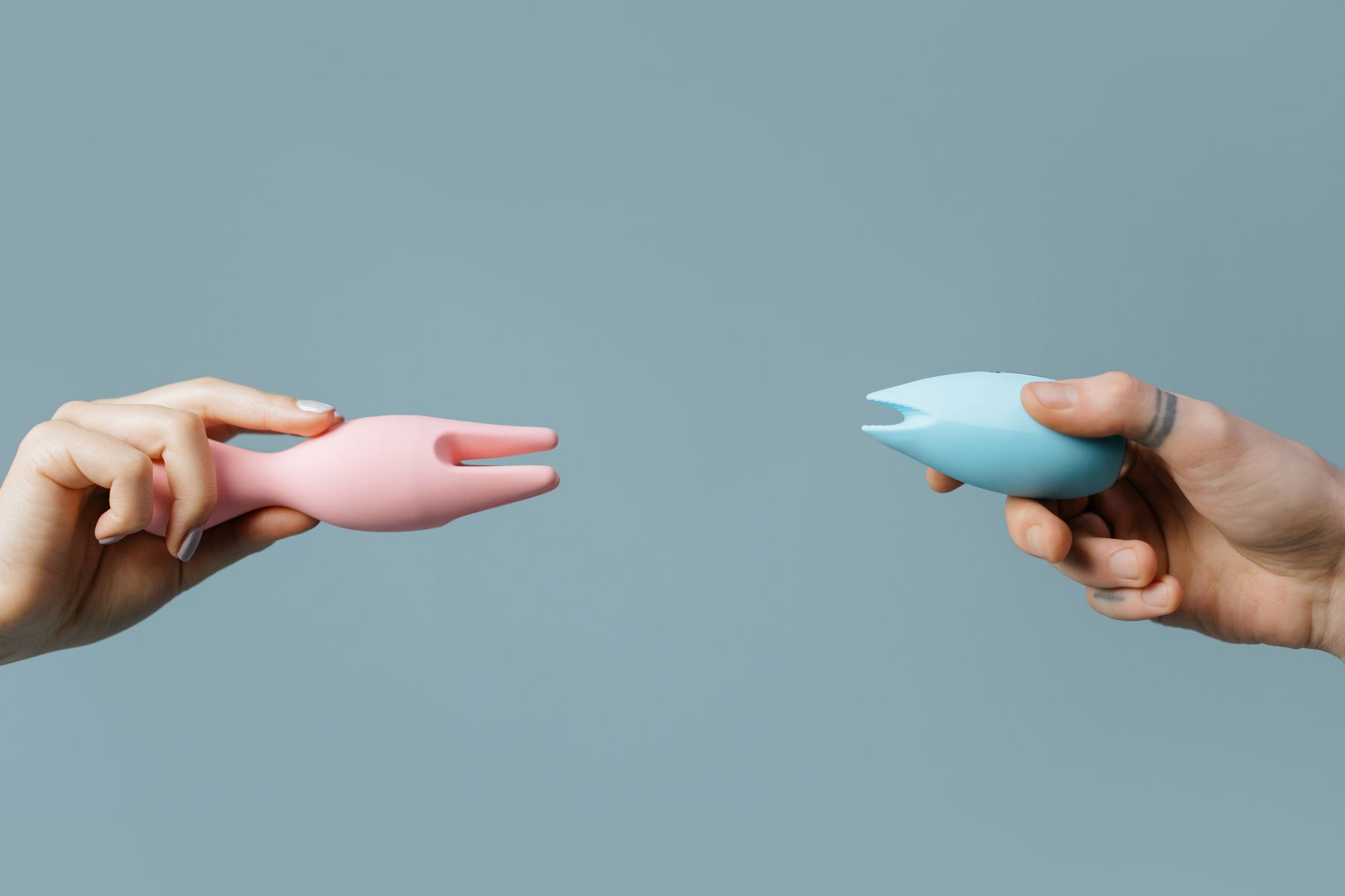
First, the design piece: lemon vibrators like the Lem are small, accessible, and deliberately non-threatening. They're not scary. They don't require you to be "ready" or to have set aside an entire evening or to have already decided you're the kind of person who does this. You can hold a lemon clitoral vibrator in your hand, feel its weight, and it's immediately clear: this is designed for you, not performance.
The suction technology (that gentle lemon sucker action) is also less intimidating than traditional vibration patterns. It doesn't buzz aggressively. It doesn't demand full arousal to feel good. It's forgiving. That matters when shame is in the room.
But here's the deeper part: tools give you permission in a way intention alone doesn't.
When you're carrying guilt, saying "I'm going to take 20 minutes for myself" feels selfish. It feels like you're stealing something. But saying "I'm going to try this new tool" or "I'm going to learn how my body works" feels productive. It reframes solo pleasure from indulgence into self-care or self-knowledge. And yes, that's partly a mental trick. But mental tricks are real and they work.
One of the first things I ask my clients to do is change how they talk to themselves about this.
Instead of: "I'm being selfish."
Try: "I'm learning what feels good."
Instead of: "I'm compensating for something missing in my relationship."
Try: "I'm taking care of my own pleasure, which is always mine to care for."
Instead of: "I shouldn't need this."
Try: "My body knows what it needs. I'm listening."
These aren't affirmations or toxic positivity. They're accurate reframes. Knowing your own body, maintaining your own pleasure, and having agency over your sexuality are not optional nice-to-haves. They're baseline healthy.
When you introduce a tool like a lemon vibrator into that reframed thinking, something shifts. The tool becomes evidence that this is legitimate. That you deserve it. That it's not shameful, it's sensible.
I see the same pattern over and over: women start using tools, they start with shame, and within a few weeks, something cracks.
Sometimes it's that they realize they've been capable of intense pleasure all along, and nobody told them that was normal. Sometimes it's that they notice their mood improves, their sleep is better, their stress decreases. Sometimes it's just that they feel less lonely in their own body.
One client told me: "I realized I've been treating my own pleasure like a guilty secret, but I've never once felt guilty about my partner's pleasure. It just hit me. I was allowed to want things too."
That's the shift. That's the work.
And a tool can help get you there. Because shame thrives in abstraction. It thrives in "I shouldn't." But it has a harder time surviving the concrete reality of: I tried this. It felt good. I'm still a good person.
Don't start with performance pressure. You're not trying to have an orgasm. You're not trying to prove anything. You're trying to spend 10 minutes understanding your own nervous system.
Pick a time when you're not exhausted or rushed. The pressure of "I have to do this fast" combines with shame to create a genuinely bad experience.
Get comfortable. Wear clothes you like. Put your phone away. Give yourself the basic dignity you'd give a guest in your home.
Start with your hands first. Spend a few minutes just noticing what feels okay. No goal. No endpoint. Then, if you want, introduce the lemon vibrator. Start at a low setting. The goal is curiosity, not achievement.
Many people find that the suction action of a lemon clitoral vibrator feels less jarring than traditional vibration, which can help when anxiety is high. You can control the intensity. You're not on anyone else's timeline.
And here's the permission I'm giving you directly: if it doesn't feel good the first time, that's fine. Try again later. Or try a different approach. This isn't something you have to get right. You're allowed to be learning this. You're allowed to be awkward about it. You're allowed to change your mind.
If you're in a relationship, shame often doubles because now you're carrying guilt about your partner's potential reaction.
Here's what I tell couples: your solo pleasure is not a referendum on your partner. It's not a comment on what they do or don't provide. It's part of taking care of yourself. And partners who are secure actually find that hot. Not universally, but commonly.
If you want to introduce your partner to what you're exploring, frame it as intimacy, not substitution. "I'm learning more about what feels good, and I'd like you to be part of that" is different from "I need this because you're not enough." Both statements might feel true, but one invites connection and one creates distance.
There's a belief in a lot of wellness spaces that you have to be "ready" for solo pleasure. That you need perfect mental health, or perfect self-esteem, or perfect circumstances.
I think that's backward. You don't need to heal all your shame before you start. You start, and the shame starts to soften because you're gathering evidence that this is normal and safe and good.
A tool like a lemon vibrator, the Lem, can be that evidence. Not because there's anything magical about it, but because it's so concrete. It's so clearly designed to feel good. It's so clearly not a punishment or a compromise.
Your pleasure matters. Not someday. Not when you've earned it. Now.
Guilt around pleasure often isn't active. It's passive. It's the voice that never says "you're bad for wanting this," it just says "don't think about it." When you introduce a tool, you're breaking that silence. The guilt rises because it's no longer hidden. That's actually a sign you're doing the work. The guilt doesn't mean you should stop. It means you're bumping into something old that needs processing.
No. Solo pleasure and partnered pleasure are separate systems. One doesn't predict the other. You can be in a thriving relationship and want solo pleasure for the simple reason that you like it. You can be single and want it. The presence or absence of a partner doesn't determine whether your pleasure is valid.
The clearest way is to separate the two conversations. "I want to explore my own pleasure" is not the same as "I want you to give me more pleasure." Both can be true, but saying them together makes it sound like one caused the other. Try: "I'm interested in understanding my body better, and I'd like to try some tools solo. I also really enjoy our time together, and those two things are different." Most secure partners actually find this attractive.
Not at all. Some people use tools to understand their pleasure. Some people use them to deepen it. Some people use them because they feel good. None of these require a deficit. You don't need to justify wanting to feel good.
That can happen if you're introducing it under pressure or if you're still carrying a lot of shame. Slow down. Remove the goal. Remove the timeline. Sometimes you need to process the guilt separately from trying the tool. A therapist can help with this. There's no rush. Your pleasure isn't going anywhere.
Yes, but not because of magic. Because you're gathering evidence. You're spending time in your body. You're discovering that it works. You're learning that pleasure is possible. That shift from abstraction ("I'm probably broken") to experience ("my body actually feels things") is how anxiety softens. The tool is just the vehicle.
Shame doesn't disappear because you bought a lemon vibrator. But it can start to soften when you give yourself permission to want something, to try something, to learn something about your own body without justifying it.
Your pleasure is not selfish. It's not a replacement for connection. It's not proof of a problem. It's just yours. And you deserve to know what it feels like.
If you're ready to start exploring, you already have permission. You always did. Sometimes you just need a tool to make that real.